Finalise the State Exco for Selangor quickly


May 20, 2013

Finalise the State Exco for Selangor quickly

COMMENT: It is indeed unfortunate that Selangor Menteri Besar, Tan Sri MB Khalid IbrahimKhalid Ibrahim, has not able to form his own “Cabinet”for more than 2 weeks since GE-13. This is due to wrangling for seats by component parties within Pakatan Rakyat.

The DAP should agree to three seats with a Speaker’s post rather than belabour over allocation of seats in the State Exco.

Let the Menteri Besar run the state as soon as possible. That requires cooperation among the coalition partners, DAP, PAS and PKR. Cooperation means compromise in the overall interest of the state. Penang and Kelantan have done so smoothly. And why not Selangor? –Din Merican

Weathering one tempest, Khalid saunters into another

by Terence Netto@http://www.malaysiakini.com

After coolly weathering the tempest caused by Azmin Ali’s challenge to his chief ministership, Khalid Ibrahim, who took his oath for a second term as Menteri Besar of Selangor last Tuesday, has had almost immediately afterwards to deal with another potentially tricky situation.

The quandary may well cause him to reflect that the tantrum thrown by Azmin was a storm in a teacup compared to what he is presently faced with.
This concerns the composition of the state executive council.

Last Thursday, at a brief meeting of the top Selangor Pakatan Rakyat leaders, the composition of the state exco was set for a four-seat allocation to DAP, with three seats each going to PKR and PAS, the latter enjoying the prerogative of nominating the speaker of the state assembly.

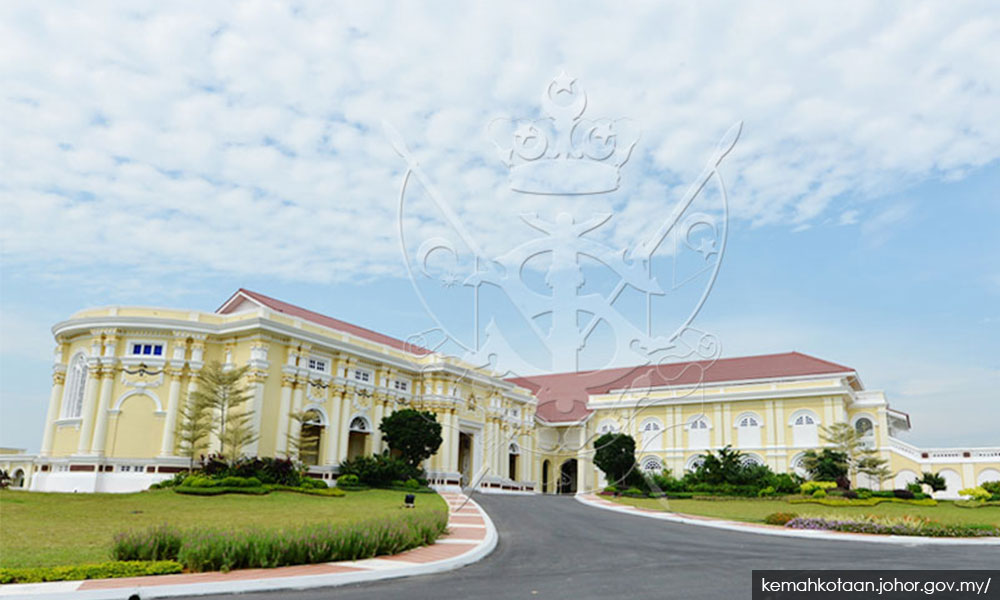
However, matters took an awkward turn after Khalid had a meeting with the Sultan of Selangor on Friday which caused Khalid to change tack.

On Saturday, he tweeted that the DAP has been allocated three exco seats together with the speaker’s post. This meant that four exco seats were to go to PAS and three to PKR.

NONEDAP’s Tony Pua (left), who attended last Thursday’s meeting, promptly remonstrated that the new arrangement was out of sync with the agreement reached at the Selangor Pakatan discussion.

Yesterday, Khalid tamped down the nascent contretemps by letting the DAP know that the discord would be resolved in two days.

How that was going to be possible was hard to envisage given the nature of the problem that had caused Khalid to apparently renege on the the formula for the allocation of state cabinet seats drawn up at the Selangor Pakatan meeting last Thursday.

Khalid’s backtracking was attributed to the Selangor palace’s desire to see seven of the state exco seats occupied by Malay legislators, with four seats reserved to non-Malay reps.

Acquiescing to this behest meant that Khalid would have to restrict DAP to three seats instead of the four agreed to last Thursday, with the speaker-ship thrown it as sweetener.

That approach would have allowed him to include one non-Malay in PKR’s allocation of three seats, what with the DAP’s allotment of three seats guaranteed to be occupied by its Chinese reps which would then bring the non-Malay total in the state cabinet to four, as per the Selangor palace’s wishes.

Faced with a dilemma

But if the DAP were unwilling to accede to the allocation of three seats to it plus the speakership, Khalid would be faced with a dilemma with respect to the palace-requested racial division of seven Malays to four non-Malays in the state cabinet.

The seven ‘Malay’ seats in the exco would then be occupied by legislators composed of four PAS reps, certain to be all Malay, and three PKR ones, who would necessarily be Malay in contradistinction to its multi-racial image as a party.

If Khalid cannot persuade the DAP to be satisfied with three exco seats, with the speakership thrown in, then he has to revert to the last Thursday’s arrangement whereby the DAP would be allocated four seats, and PAS three, with the speaker’s post thrown in for good measure, while PKR gets three seats.

Needless to say, this formula would not be in keeping with PKR’s multi-racial image. If this were all the problems Khalid faced with respect to the composition of the state cabinet, matters would not be comparably daunting.

There is also the matter of the ‘Aku Janji’ pledge that the Selangor palace would want exco members to make after taking the oath of office as members of the state cabinet.

There is a provision on the ‘Aku Janji’ list that requires the state ministers to pledge to abide by all the directives issued by the ruler.  This is tricky because of the dilemma exco members would be in when faced with issues where directives are perceived to be in conflict with the interests of people whom they have been elected to represent.

The ‘Aku Janji’ pledge is a legacy of the days of UMNO-BN rule, devised by a mindset that is apt to identify their survival with the interests of the people.  That it is being recycled and foisted on a Pakatan administration that has been re-endorsed by a Selangor electorate by a bigger margin than when it was first elected at the 2008 polls can be taken to be a validation of the Shakespearean insight that the bad humans do lives on after them whereas the good is often interred with their bones.

Khalid Ibrahim, by all accounts a good manager in his role as state CEO, may have felt that successfully fending off the challenge of his PKR rival Azmin Ali to his continued occupation of the Selangor MB’s post was cool; he’s just now confronted with a challenge to his mettle as a democratically elected leader of a multi-racial component of a coalition that is wont to deemphasise race in preference to national identity.

How he gets the salience of those democratic facts across to people who can be a little forgetful about the nature of our polity where the monarchy is constitutional – and not peremptory – constitutes the bigger test of his calibre as a leader.

PKR reveals Proof of Phantom Voters


May 20, 2013

COMMENT: When I went to the polling station at SMK Seafield, Subang Jaya with my wife, Dr. Kamsiah on May 5, I thought I was an isolated case of a voter whose name had been inadvertently deleted during the updating of the electoral roll. I had voted there in 2004 and 2008. I had known in advance that my name was not in the roll, but some friends told me that I should go there early and appeal to the officer in charge so that I could be granted my democratic right to vote. But still my right to vote was denied. So I could not have the pleasure of having the infamous indelible ink on my forefinger!

I also discovered that I was not alone. 20 eligible voters before me had suffered the same fate. I left the polling station disappointed. Later that election night, I consoled myself that DAP’s Hannah Yeoh and her colleague for the Parliamentary constituency had won convincingly. –Din Merican

PKR reveals proof of phantom voters

In a series of exposes on electoral fraud, PKR today revealed a case where eight individuals in various constituencies were denied the right to vote as someone else had cast the ballots using their identities.

I was of those victims who can't vote , here standing at the polling station I had been voting all these while.

I was of those victims who could not vote , here standing at the polling station in SMK Seafield, Subang Jaya where I had voted in 2004 and 2008

Speaking at a press conference today, PKR strategy director Rafizi Ramli said that the individuals affected had lodged police reports on the matter and are still waiting for action from the authorities.

“This shows that the existence of identical MyKads given to various individuals so that they can become phantom voters,” he alleged.

Pakatan Rakyat had alleged that the recent general election was marred with irregularities and had embarked on a series of rallies to inform the public of the matter.

The opposition pact also added that they would file election petitions for about 30 parliamentary seats.

Discredits electoral process

The parliamentary constituencies based on Rafizi’s list were Sungai Petani, Rembau, Kuala Selangor, Serdang, Kemaman, Tumpat and Shah Alam.

Rafizi, who is also Pandan MP, said that although the opposition had won in some places mentioned, the alleged phantom voters were widespread in other areas while many have yet to lodge police reports on the matter.

“Nevertheless, the moment you have phantom voters, it discredits the entire electoral process.

Why were they so happy? They should be ashamed of themselves, the moment you have phantom voters, it discredits the entire electoral process.

Why are they so happy? They think they had done the duty. They should be ashamed of themselves, the moment you have phantom voters, it discredits the entire electoral process.

“But the issue is also bigger than phantom voters. It also shows that there is something wrong with how MyKads are being given out by the National Registration Department (NRD),” he said.

Rafizi urged the Election Commission (EC) and the NRD to explain the matter so that they could be judged in the court of public opinion.

“Let them come up with another foolish statement like the ones they gave on the indelible ink fiasco. I also urge Khairy Jamaluddin, our newly appointed [Youth and Sports] minister, to explain this as it also involves his Rembau constituency,” he said.

On his next course of action, Rafizi said that he would try to get the eight individuals to also sign statutory declarations (SD) on the matter to take it up when filing the election petitions.

He added that the EC and NRD should at least issue a statement to address the anomaly rather than keeping mum. “They need to be held accountable. At least acknowledge the problems instead of being in denial,” said Rafizi who vowed to reveal more findings on electoral irregularities soon.

Islamic Diplomacy and the Search for Human Security


May 20, 2013

Islamic Diplomacy and the Search for Human Security

The Keynote Address at the Peace and Security Forum 2013 at the Institute of Diplomacy and Foreign Relations, Ministry of Foreign Affairs, Kuala Lumpur on May 16,2013.

by  HRH Dr. Raja Nazrin Shah
HRH Dr. Raja Nazrin Shah

I WARMLY commend the organisers of this conference for shining a spotlight upon one of the most pressing challenges confronting the Muslim world.

The violent conflicts that afflict some Muslim countries are discussed in many conferences. They feature in the global media every day. In fact, they feature in the global media virtually every hour of every day, and in my view rightly so, for almost every day Muslim lives are lost, Muslims’ limbs are maimed and Muslim land and property destroyed.

But few international forums — and far less the global media — look at the problems the Muslim world is encountering in a way that is more profound and comprehensive, as that of a paucity of human security.

Fewer still approach the subject of human security in the Muslim world from the standpoint of the role that Islam and diplomacy can play in promoting it. The theme of this conference is, therefore, both novel and welcome.

Before I proceed, I should like to take a moment to place the problem of human security, as I see it, in perspective. It is interesting to note that the concept of human security first came into international vogue as a result of the work of a Muslim economist, Dr Mahbub ul Haq. He conceived both the concepts of human development as well as human security that have been so central to the UNDP (United Nations Development Programme) approach to developmental issues since the 1990s.

Unlike the Human Development Index of the UNDP — which has now been widely accepted and adopted — an index of human security is still very early work-in-progress. Even an understanding of what human security means and what it encompasses is the subject of debate and discussion.

Until the dust settles on this subject, I should like to be guided essentially by the initial concept as outlined by the UNDP in 1994 and developed further in Version 2 of the Human Security Index.

I must stress, however, that the Human Security Index probably cannot yet be regarded as a sufficiently robust measure of the real state of human security among different countries. But it does give some general picture of the situation. Its importance at this stage lies more in its ability to depict the relative gravity of conditions in different countries based on the criteria employed.

In my view, briefly expressed, human security centres on the security of the human person and the community. This is unlike the conventional notions of national security which pivot around the security of the state.

Human security includes traditional national security concerns such as security from external aggression, security from external intervention, security from foreign occupation as well as security from internal strife; but it also embraces much more.

It includes the security of livelihood provided by steady jobs and meaningful employment; the security from disease that is provided by good and widely accessible health facilities; food security; protection from crime and domestic violence; freedom from political repression; the right to practice one’s religion freely; and the right to clean air, safe water and a sustainable and healthy environment.

Human development as postulated by the UNDP is thus closely correlated with human security. The former seeks to develop the human person; the latter to protect him or her from threats to that development.

Human security facilitates human development, while human development releases more resources to improve human security.

Human security tends to be better assured in peaceful countries that rank high in human development, but it can also lag behind.The United States, for instance, ranks No. 3 in the latest Human Development Index; yet its composite Human Security Index ranking is 147 out of 232 countries and dependencies.

The ranking reflects very poor scores in several areas, including very high incarceration rates and wide disparities in income and wealth.

Thus understood, human security, or human insecurity, knows no nationality. It knows no religion. And it knows no race or ethnicity.

Although the peoples of the developed nations of Europe and North America are less vulnerable, human insecurity also tends to recognise no geography.

Unemployment in the European Union, for instance, is expected to reach an average of 12.2 per cent this year. That is four times the unemployment rate of Malaysia. In Spain and Greece, every fourth person in the workforce is unlikely to have a job.

Human security, whether in the Muslim world or elsewhere, is something that is complex in the sense that it cannot be advanced by just the one tool of diplomacy.

Diplomacy, indeed, is perhaps not even the most important instrument. Much of the hard work must be done at home in each country, through sound and equitable political, economic and social policies.

The primary actor and driver may indeed be the state, but there are a host of other important domestic and external players that make an impact upon human security in every individual locale.

The mix of political, economic, social and security factors that affect human security differ markedly among countries and communities, Muslim as well as non-Muslim.

I will elaborate on some of these general points presently, but let me turn now to the quest for human security in the Muslim world.

As we know, Muslim communities are found virtually everywhere on the globe and amidst differing conditions of human security.

Like many non-Muslim majority countries, Muslim countries and Muslim-majority countries often fare worse in the Human Security Index than they do in the Human Development Index.

This reflects their relatively poorer performance in areas such as political freedoms, income distribution, access to information and personal security compared to indicators such as per capita GDP (Gross Domestic Product).

Whereas at least ten Muslim-majority countries make it to the top 70 in the Human Development Index ranking, none are in the top 70 in the Human Security Index ranking. Seven countries managed to be ranked between 80 and 100. As in the case of the Human Development Index, many Muslim countries are ranked in the bottom third of the Human Security Index table.

The picture that emerges shows that the comprehensive well-being of the people in a number of Muslim-majority countries leaves much to be desired.

Many millions of Muslims do enjoy high levels of material security as minorities in affluent Western countries and as majorities in high income and peaceful Muslim countries like Malaysia, Brunei, Turkey, Qatar, the United Arab Emirates and Saudi Arabia.

But when factors like extensive poverty, unemployment, income inequality, poor education opportunities, inequitable access to healthcare, violent conflict, political repression, abuse of rights, lack of information empowerment, and the position of women are factored in, about a billion Muslims in a majority of the Muslim countries, or two-thirds of the total global Muslim population, are at risk.

The tragic human security conditions in conflict-ridden and occupied Afghanistan, Iraq, Palestine, and war-torn Syria, Somalia, Sudan and South Sudan — the last four are occupied, but, only by themselves — are only too painfully evident to us all.

But there are also hundreds of millions of Muslims who live in vulnerable communities or areas in India, Pakistan, Bangladesh, Myanmar, Indonesia, Yemen, Nigeria, Niger, Ethiopia, Sierra Leone, Benin, Chad and Senegal.

Put bluntly, the Muslim world is home to a disproportionate share of all the seven areas of human insecurity identified by the UNDP.

Vulnerabilities to aggression, foreign intervention and occupation, sectarian, tribal and ethnic strife, joblessness, poverty and severe income disparities, disease, crime, undemocratic regimes, political repression and violation of rights, discrimination against and abuse of women, and even natural and environmental disasters are all too common and even pervasive in large parts of the Muslim world.

In the Arab world, including the imploding crucible that is Syria today, as well as in Afghanistan, the destruction that Muslims have managed to inflict upon themselves has been colossal. This has been aggravated by some countries that have colluded with foreign powers and involved themselves in the affairs of fellow Arab and Muslim nations.

The Sunni-Shia fault line that runs through the Arab crescent and the Persian Gulf has been a major destabilising factor. It pits Muslim against Muslim not only within countries but between countries as well.

Together with historical tribal enmities, it underlies much of the unrest in the Arab world today. The confrontation between Arabs and Persians, for example, is an age-old enmity that has further embroiled West Asian nations in intra-Muslim struggle and conflict.

The Sunni-Shia sectarianism, tribal animosities and Arab-Persian power plays have undermined not just the national resilience of Muslim countries in West Asia and North Africa. They have also rendered the countries even more vulnerable to the machinations, military intervention and occupation by foreign powers and weakened their capacity to present a collective response to Israel.

Next to war and violence, nothing degrades human security and human dignity more than extreme poverty and widespread unemployment, for their effects are often hunger, malnutrition, starvation, illiteracy, disease and crime.

Such conditions also contribute to a highly combustible political environment.In this regard, poverty and unemployment levels are unacceptably high in much of the Muslim world. No less than 40 to 65 per cent of the population live below the national poverty line in nearly a third of all Muslim countries or those with a sizeable Muslim component, for which there is reliable information.

Democratic governance, protection of human rights and support for gender equality are also key attributes of human security and human development that are in short supply in many of those countries.

Taken together then, the human security landscape of the Muslim world is a grim and dismal one. However, this situation has nothing to do with Islam. It is, in fact, the very antithesis of all that Islam stands for.

Instead, the problems have more to do with factors such as sectarian, tribal and class rivalries; the consequences of colonisation including borders drawn without regard to the glue that natural demographic patterns would have yielded; the strategic location and resources of the Gulf region that make them perennial targets of predatory powers; the insecurity of small states that seek alliance with foreign powers; the dislocation that the imposition of the state of Israel created and the half century of violence that has followed in the absence of a political solution; the grip of unhealthy tribal traditions and customs that distort religious interpretation and inhibit human development; and the absolute lack of resources in some sub-Saharan countries.

As I observed earlier, the improvement of human security, as also in the case of human development, is a task mainly to be done at home. Indeed, diplomacy is one of the means which can be used for that purpose. It normally comes into prominence, however, only when a country is at war or is under military threat, or when there is foreign intervention in internal conflicts.

For those Muslim countries and their peoples that are in this unfortunate situation, like Afghanistan, Iraq, Syria, Palestine, Sudan (and thus South Sudan), diplomacy becomes a crucial instrument.

But good diplomacy — I am using “diplomacy” here interchangeably with foreign policy — can also be important for alleviating other aspects of the human security conditions that prevail in many Muslim communities.

Diplomacy has become indispensable in this globalised age when the politics, economics and security of nations and communities are becoming increasingly enmeshed.

Although domestic policies are primary, human security and human development are impossible to pursue without engagement with the outside world and without interaction with other important actors.

This is especially the case for the less developed nations with scarce or limited resources that make up a large proportion of the Muslim world.

If diplomacy — that is diplomacy as in foreign policy — is important in the pursuit of human security, what has Islam to offer to the endeavour? How can Islam affect diplomacy so as to provide better human security in the Muslim world and beyond?

When I surveyed the literature on Islam and diplomacy, the work that stood out was the Rusul al-Muluk, or Messengers of Kings. Written in the tenth century, or about 300 years after the demise of the beloved Prophet Muhammad (PBUH), it describes the diplomacy that was practised by the Arabs and Muslims from pre-Islamic days to its own time.

It also presents and makes use of examples of Arab diplomatic practice drawn from the Quran and other sources used by Muslim scholars.

The work examines extensively the use of emissaries, diplomatic exchanges, the types of treaties and agreements that the Prophet and other Muslim leaders entered into with Muslim and non-Muslim tribes and empires, the principles of diplomatic negotiations, the codes that guided war and peaceful settlement, the granting of asylum, and the treatment of prisoners, refugees and minorities.–Part I (May 18, 2013)

MUCH of the diplomacy that is described in the book Rusul al-Muluk, or Messengers of Kings, existed before Islam, and it also continued to be practised by non-Muslim nations after the revelation of Islam.

From translations of ancient writings such as Letters from Early Mesopotamia and the Amarna Letters, we learn that there was a thriving culture of diplomacy that had been practised as far back as the 3rd millennium BC, in the very region we now call West Asia and North Africa.

The diplomacy depicted in that literature, practised by the ancient kingdoms and empires of Mesopotamia, Babylonia, Assyria and Egypt, among others, included diplomatic codes of conduct, exchange of emissaries, arbitration and mediation, negotiation of treaties and treatment of political fugitives.

Diplomacy in somewhat less ancient times developed in similar modes in the great civilisations of China and India. For example, the “realist theory” of International Relations can be traced back to Sun Tzu in 6th century BC China and Kautilya in 3rd century BC India. The Persian, and the Roman and then the Byzantine Empires, of course, were famous for their diplomatic endeavours.

The revelation of Islam, however, brought a sea-change in the conduct of foreign policy and the practice of diplomacy as Muslim political sway expanded in West Asia and beyond.

Islam’s conception of humanity, the Ummah, its world view and its ethos and values were infused into foreign policy and diplomatic practice. The personal character of the Prophet (PBUH), guided by the principles and teachings of Islam, also left its imprint.

The Rusul al-Muluk, the Islamic work which I referred to earlier, is not an ordinary manual on diplomacy; rather, it is a work that boldly argues for a very modern theory of International Relations, by rejecting warlike policies in favour of low-key but firm diplomacy with the pragmatic outlook of constructive realpolitik — all done with the aim and intention of securing the common goal of human security among all mankind.

The ultimate purpose of Islam is the well-being and salvation of all humankind, irrespective of national, ethnic or even religious identity. Islam’s horizon is the Universe: it does not stop with the Muslim Ummah.

This is the bedrock upon which universal human well-being (including what is now called “human security”) is to be built, both domestically and abroad, across nations.

Development, peace, security, justice and human dignity are for all peoples regardless of race or gender or even faith. Human beings are created by God to fulfil the dual role of the person as a servant of God (al-’Abd) and as His representative (al-Khalifah) on Earth.

The goals of Islam that have a bearing upon the prevailing ideas of human security – as well as human development – are founded on two concepts. One is that of human well-being: Sa’adah, which can also mean success, happiness, prosperity or felicity.

The second is the Muslim concept of the good life in this world and in the next world: Hayatun Tayyibah. The balanced fulfilment of both the material and spiritual needs of all human beings will lead to human well-being and the good life that fulfils human security needs.

A fundamental core of human security is the freedom from want, and this is best assured by education and knowledge, which can help secure jobs and a better livelihood. In Islam the pursuit of knowledge, both spiritual and material, is nothing short of a religious obligation. Acquisition of knowledge is considered a form of worship and will bring a Muslim closer to God.

Islam also enjoins ethical action (‘Amal Salih), morality (Akhlak), justice and fairness (‘Adl), moderation (‘Iffah), integrity (Amanah), and provision for the poor and the disadvantaged.

The payment of zakat, or charity, by the rich for the poor is obligatory. Islam’s principle of Tawhid further demands that there be no exploitation among human beings. All these teachings point to a basic concern with what we call “human security”.

In the field of foreign policy, diplomacy and war, the Islamic tradition privileges negotiations and peaceful resolution of disputes over war. It further specifically forbids the taking of innocent life and damage to property.

It also enjoins humane treatment of prisoners and due protection for refugees. Our tradition counsels just peace, when the circumstances allow.

The Islamic faith, thereby, provides a unique religious, normative and legal reference for the formulation and implementation of foreign as well as domestic policies to protect and promote human security.

So what roles can Islam play in the contemporary diplomacy of Muslim countries in their pursuit of human security? I can think of at least three.

FIRST the great achievement of the Prophet (PBUH) in bringing peace and reconciliation to the warring tribes and communities of Arabia can be invoked to inspire and reinforce efforts to reduce enmity among Muslim countries and communities and make their relations harmonious.

There is no more necessary and important effort than the active pursuit of reconciliation for healing the wounds caused by conflicts, bloodshed and violence.

This is especially pressing for the conflicts in West Asia and North Africa, where Sunni-Shia sectarianism and tribal conflicts are tearing nations apart and bringing them into conflict with one another.

What is happening in Syria, Iraq and Afghanistan with the involvement of other Muslim countries as well as outside powers is producing the very antithesis of the peaceful aims and teachings of Islam. It strikes at the very core of the human security concerns of the affected multitudes, which include millions of displaced persons and refugees.

SECOND Islam is all about human dignity, human development and human security. Yet in so many countries of the Muslim world, it is these very things that are in shortest supply.

The values and teachings of Islam can be more effectively mobilised to spur greater efforts by Muslim countries, acting individually as well as collectively, through such institutions as the Organisation of Islamic Cooperation (OIC) and the Islamic Development Bank (IDB), to bring more and better development.

These efforts could embrace marginalised minority communities, such as the Rohingyas in Myanmar and the Muslims in southern Thailand and southern Philippines.

Among the programmes that should be highest in priority are those aimed at improving education and health facilities, reducing income inequities, bringing greater protection and emancipation for women, strengthening representative government, and enhancing standards of governance.

These, in fact, are some of the causes that are already being championed by organisations such as the Islamic Development Bank, but progress will continue to be slow unless there is greater commitment from many member countries.

THIRD the non-governmental infrastructure for human development and human security greatly needs to be developed in many Muslim countries. Organisations in civil society and the private sector have a vital role to play and an important contribution to make.

 In areas such as education, healthcare, welfare activities, protection of women and children, crime prevention and environmental conservation the participation of voluntary organisations is necessary and invaluable, especially when they are supported by the business sector and the state.

Muslim nations, again, individually as well as collectively, can do much to foster and strengthen the infrastructure within their own countries and sometimes even in others.

If we take our humanity seriously, and are motivated by the guidance conveyed in our sacred traditions, then we should expand our conception of security to embrace its human dimensions.

A foremost requirement for promoting human security is the recognition of diversity and differences in our global context, as well as within the boundaries of individual nations.

To this end we should cultivate awareness and understanding of the worldview of others, and learn to respect their various traditions.

This is why inter-cultural competence and training for understanding other religions and worldviews is important – both for non-Muslims to appreciate Islam, and for Muslims to appreciate cultures and peoples belonging to other traditions.

Indeed the search for human security is the gateway to the future of a reformed global order.The combined experiences of human societies in the modern era in the economic, political, social and cultural domains of life are pushing towards recovering the basis of security reflected in basic human needs and hopes.

Peace will only be achieved between nations, and among the diverse peoples within nations, when security is understood in these terms. (Part II-May 20, 2013)

http://www.nst.com.my

Stop Racism and Ustazism


May 20, 2013

COMMENT: I have always enjoyed reading the writings of Prof. Dr. Tajuddin. He is a clear thinker with the guts to call a spade a spade. Guts and grit are qualities that are lacking in our communities. Yes, indeed. Our country is in trouble and that means we are in deep trouble. Why? Because we leave everything in the hands of politicians who have consistently betrayed our trust.

Knowing that, we remain on the sidelines assuming that theKid and the monkey future of our country is still  in good hands. Malaysia is not in good hands. Maybe I am being a pessimist to say that we have reached a breaking point.

We have an arrogant regime back in power which is behaving like a wounded tiger ever ready to pounce on dissidents and civil society activists at the slightest provocation, and an alternative force that continues to use street protests for their own ends. I have seen both sides and I  am disappointed.

Prof Dr. Tajuddin’s message, which I endorse, is intended for those smooth talking politicians on both sides of the political divide, in UMNO-BN and Pakatan Rakyat. Stop pontificating and jostling for power and get down to the serious business of governing this country. Malaysia can no longer on auto-pilot. It needs leadership with guts and integrity to do the right thing.

Crimes of Leaders

Fortunately, we have civil society activists like Ambiga, Haris, Hishamuddin Rais, Poet Laureate Dato Samad Said, Dr Wong Chin Huat, Marina Chin et.al and new generation of young men like Adam Adli and the netizens who are speaking up. So far their message has not reached our rural heartland which remains the backbone of the present regime. If we can awaken the sleeping giant that is our rural heartland, we will be able to move forward for better Malaysia. Let us  now debate the good Professor’s blueprint.–Din Merican

http://www.malaysiakini.com

Malaysia is in trouble and We are: Stop Racism and Ustazism

COMMENT by Prof Dr Mohamad Tajuddin Mohamad Rasdi (May 19, 2013): Although many things remain uncertain after the GE13 result, one thing is unarguably clear… Malaysia is in trouble.

Who is in trouble? Not Pakatan, not BN to my mind… we are. We… the rakyat. Our children are in trouble and yes, theirs too, in the distant future if we do not stop this juggernaut called…racism.

I would like to outline my basic blueprint for rebuilding this country with the special focus of eliminating racism as its main objective. My programme may be ‘shocking’ or ‘unusual’ but it has the virtue of never been thought off or tried.

In architectural design training, the best design ideas are usually the ‘shockers’!I have been trained to understand the box but never to stay long in it and to always leave it on the front porch…well, most of the time.

My programme or blueprint can be easily implemented by BN…if it wants to, if it has the heart, the will and intelligence to.NONEBut if it is still sore what with statements like; ‘leave the country’ or ‘sodomising minds’ and ‘Chinese Tsunami’, then I would assume that it is disinterested to resolve the problem of racism in this country. Point blank.

Now if the minority BN government does not want to implement the programme, will the majority Pakatan form its own shadow cabinet and pool their financial resources to implement this programme?

In the first place, I have to ask Pakatan leaders a point blank question: Are you guys actually interested in resolving our dreaded racism issue?

I have followed very closely political events in this country from 1997, and after all that Anwar and Pakatan have gone through…I still have a small lingering doubt.

In my academic reading, Pakatan is simply a strong coalition built to fight one single enemy. Which enemy? Racism? Religious intolerance? Poverty? Nope…just BN.

I am generalising of course but I am using my poetic license to make this simple point that racism will still not go away if Pakatan now sits in Putrajaya. Why do I say so? Because I have not witnessed a single paper by Pakatan to seriously look at the problem of racism.

Now if Pakatan, too, seems disinterested to rebuild Malaysia, then it is up to the third political force, the rakyat via the machinery of NGOs like BERSIH and the Islamic Rennaissance Front to take matters into our own hands.

My philosophy is simple…if you believe in something; you just have to do it yourself.Then come the next election we, the rakyat, will throw both parties out and rule in a different way.

How? Think out of the box-lah.

Nice words

Now, before outlining my programme, allow me to say a few nice words about BN. Not the present BN but the old founding fathers of BN.judiciary forum lingam tape 171107 salleh abbasYes…the one before former premier Dr Mahathir Mohamad and the sacking of Salleh Abbas (right).

To be fair UMNO, MCA and MIC have done a great service to this country by successfully working with one another amicably and providing peace and prosperity for three decades.

When I stand amidst 2,000 academics at UTM hall with easily 90% Malay Muslim scholars, I would say BN deserves an A-. Why A minus? Must subtract a very strong minus for 1969 May 13. Now let’s be clear the A- is for the BN before Mahathir.

The post Mahathir BN deserves a failing grade and the grade for a post GE13 BN is a letter and level of failure that I can’t find low enough. Why have I given a failed grade to Mahathir’s BN when we have shiny tall buildings, and a New Putrajaya kingdom with a massive crystal mosque?

Because this was when basic human decency and dignity was violated.Operasi Lalang, the Memali bloodshed, the Tun Salleh Abbas sacking, The Anwar ‘kangaroo’ Trial, The Anwar second sodomy case, The dubious sexually explicit videos and above all else the death of many innocent children in the National Service.

Fail. E-, F, X, whatever.

It is my academic reading that this nation has lost its citizen’s honor and respect. How can that compare to BRIM and the Tall Two Towers of Petronas or the Splendour of Putra Mosque?

Allah The Most High sent all his prophets to teach about the dignity and humaneness of man to treat one another with love and compassion. Allah The Most Beneficient, needs no RM600 million mosque.

So, in summation, BN was a great blessing then, but now it is becoming an entity that would dismantle what its own forefathers built. In principle, there is nothing absolutely wrong with the political concept of BN…its present leaders show no qualities comparable to the leaders of old.

Right, so now comes my programme. Remember…I am not a social scientist, nor a super management guru but just a guy with a Phd in architecture, 40 books to my name, hundreds of encyclopedia entries, hundreds of media articles and a fondness for reading how to get close to god from Christian, Muslim, Hindu, Buddhist perspectives, as well as freethinkers.

This is my take and my priority in dealing with racism.

Retrain the Ustaz

First and foremost, I would like to retrain 50 ustaz or religious teachers for sham kamikaze dan ustaz donsix months on a single message; Islam abhors, rejects and can never tolerate racism in any form, action or even thought.

The Ustaz will be taught in class, at the temples, churches and houses of people from various races and religions.Upon graduation, they will be the light that will realign the Muslim Malay mindset.

Why have I made the ustaz my top priority? I have listened to thousands of sermons, CDs, cassettes and ceramah to know that the ustaz and the content of their lectures and sermons have contributed greatly to the polarisation of this country.

My second priority is education. I have already written extensively about vernacular schools and the national curriculum. Just to sum up, there are just two points.

First, if we are to keep the vernacular schools and religious madrasah, then there must be a no-nonsense policy that the children must have a ‘year out’ at the primary and the secondary level at a national school.

Second point is that the national school curriculum must be revamped so that cultural and religious needs of non-Malay Muslim students must also be strictly adhered to.

Exchange some of the content of science, maths, history, geography and Bahasa Malaysia for cultural studies and religious understanding.There will be teachers teaching Islam, Christianity, Buddhism and Hinduism in the national curriculum.

My third priority is my Hijra Children Concept which I wrote about in Malaysiakini some time ago.

In sum, I called for volunteer parents of 14 year olds and 16 year old sons to come forth and exchange their children with a family of a different race and culture for a period of three months. In this way not only the children will get to interact with different people in Malaysia, the parents can also interact with the relatives of other culture related to the adopted child.

This is a very important programme because of its direct social implications.
national service weapon training 220905 registrationFourthly, I would personally dismantle the National Service, kick out all military personnel and reorganise the camps into fun filled summer camps concept of 2 weeks with 50 percent Malays and 50 percent non-Malays on a voluntary participatory method.

There will be no military style program but more of games, talks, art and craft and service to the community visitation to temples, churches and mosques.

Fifthly, I would reorganise Dewan Bahasa and split it into one which still concentrate on developing knowledge in Bahasa Melayu but the other entity must publish books about our different cultures and religions in the Malay, Chinese and Indian languages. The books should be about rituals, customs, religions and traditions.

Sixth, I would concentrate on our teachers in secondary and primary schools. The teachers have to be retrained like the Ustaz but in a one month course where they learn in class but also get close to the multi-ethnic parties.

Seventh is a programme for university students.NONEThe students must be retrained to understand that cultural understanding is paramount in business management as well as in public relations.

Regardless of whatever profession students target these two skills are necessary for confident career advancement or prospects.

The eighth programme is what I call the ‘Personal touch’. In the age of mobile phones, fast internet and everything on a tight schedule, we must go back to the simple days of laid back talking, eating and plain old socialising.

All politicians, high ranking officials should take off one weekend every four months to pick from a preselected family of a different race and live with them and participate in the family, religious and social rituals.

Leaders must come down to earth once in a while…or for a number of whiles in fact, to rediscover the true meaning of humility, tenderness and simple caring. All these human traits seem to have disappeared in front of the LCD screen.

Inter-cultural exchange

At UTM School of Architecture, in the measured drawing programme where students have to measure and record the history of heritage buildings, they would have to stay for a month with the families that own the houses and the community which surround it.

The inter-cultural exchange is a by-product that I found most beneficial and important.NONEThere you have it. My simple blueprint. Call it naïve, strange or even ridiculous.

But this is my honest reading of what has happened in Malaysia and how I think might return us back to a nation with a serious and humane conscience and minus racism and religious intolerance.

If BN and Pakatan is disinterested, then Malaysians of all walk of life with the help of NGOs can raise funds and organise ourselves to do what must be done for our children’s future.

Racism in Malaysia will never disappear and having certain parties purposely, accidentally or even naively perpetrating mistrust between the races will not help the situation change.

The fate of our nation lies with the few citizens who still have a conscience, hope and the vision to see Malaysia in a new light.


NONEPROF DR MOHAMAD TAJUDDIN MOHAMAD RASDI is a 23-year veteran academic and teaches architecture at Universiti Teknologi Malaysia. He specialises in mosque and Islamic architecture particularly that which relates to Malaysia using a hadith-based and socio-cultural approach in order to create the total idea of built environment suited for a whole social structure.

Cops widen probe on Adam


May 19, 2013

Prime Minister Najib: Listen to Voices of  Student Dissent

Free Adam Ali

The Voice of Student Dissent

COMMENT: Elections are over but young citizen activists who are unhappy with the results are back to show their dissatisfaction with the outcome by attending rallies organized by the Opposition in large numbers. They are defying orders from the Police not to attend these gatherings which have been declared illegal by the Police.

They see injustice and want to change so that they are free to choose a government through free and fair elections. This movement for change cannot be suppressed because people like Adam Ali and his friends and associates in various universities and other educational institutions are driven by democratic ideals, not by money or fear tactics. Like their counterparts in Indonesia at the close of the Suharto era, they choose democracy and freedom.

His friends were feeding him food while his hands were handcuffed when he was brought to his place in Bangsar this evening.

His friends were feeding him food while his hands were handcuffed when he was brought to his place in Bangsar this evening.

Their demands are simple; they want a legitimate government, not one that retains power by massive electoral fraud. They want the Chairman and Deputy Chairman of our Election Commission to step down; like BERSIH, they seek electoral reforms, and they want the EC itself to be revamped and made independent. not an appendage of the Prime Minister’s Department.

Will the Najib administration engage them civilly? Obviously not, since the symbol of student protest, Adam Ali, is under detention and faces the prospect of imprisonment of up to 20 years under the penal code.

New Team at Royal Malaysian PoliceHere is the opportunity for the government to crack down on Malaysian dissidents. We have a new Minister of Home Affairs and Inspector-General of Police and his Deputy (above). They are keen to show that they are tough and intolerant of dissent. They will not hesitate to use whatever means available to them to deal with student  protests and political dissent led by the Opposition.

In truth, high handed methods will only acerbate, not alleviate tensions since these student activists are intelligent and reasonable people.

ambigaWhat the Home Affairs Minister and his Inspector-General of Police need to do is to have dialogue with them. It is very much in the power of the Minister of Home Affairs and the Inspector-General to defuse the mounting tension by releasing Adam Ali from detention and by allowing peaceful protests to go on.

At the same time, the Najib administration should address the issue of electoral reform and the demands of BERSIH for free and fair elections. It should also ask for the resignation of the Election Commission Chairman and his Deputy to facilitate change. –Din Merican

___________________

Cops widen probe on Adam

by Ram Anand@http://www.malaysiakini.com

Adam AliStudent activist Adam Adli, who was arrested yesterday, is also being probed under Section 124 (B) of the Penal Code in addition to being investigated under the Section 4 of the Sedition Act.

His lawyer Eric Paulsen said that the police had told a magistrate this morning that Adam is also being investigated for participating in an act “detrimental to parliamentary democracy”, which is now a crime based on a newly amended provision under the Penal Code which came into effect late last year.

Paulsen said that this provision under the Penal Code was “too general”.  Adam is investigated for the remarks he made during a public forum at the Kuala Lumpur and Selangor Chinese Assembly Hall (KLSCAH) on May 13, where he, alongside several other activists, urged the people to stage a massive street protest against electoral fraud.

Investigations are also based on a report by Free Malaysia Today, quoting rally organisers telling the forum that they will use the rally to “topple the government”.  This means Adam could face up to 20 years in jail if he is found guilty under the Penal Code.

After a day, no statements taken
 
Magistrate Muzlinda Mohd had ordered for Adam to be remanded for five days due to the nature of the alleged offence, Paulsen told Malaysiakini.

The 24-year-old Adam, best known for being suspended for three semesters by University Pendidikan Sultan Idris (UPSI) for lowering a flag bearing Prime Minister Najib Abdul Razak’s image in front of the UMNO headquarters two years ago, was arrested in Bangsar Utama at 3pm yesterday.

At the time of writing, the Police have yet to record his statement, which according to Paulsen, suggests that the arrest was an act of punishment.

“It has been more than 24 hours, and he has yet to have his statement taken,” Paulsen said, saying that Adam is still in a lock-up at the Jinjang Police station.

Paulsen, who is representing Adam along with Latheefa Koya, said that they are unhappy with the remand period and will file an objection tomorrow. He also said that Adam’s arrest and subsequent investigation signals lack of tolerance for dissent by the Najib administration.

Getting into the Cabinet the Waytha Way: Just Go on Hunger Strike


May 19, 2013

COMMENT: This is the new politics of Malaysia. One way to be in the Malaysian cabinet is to do it the Waytha Way.By putting your life on the line and compromising your health, you get the attention of the Prime Minister. And presto, you find your way to  Putrajaya. You become a senator and almost simultaneously you get to be a Deputy Minister. You do not have to be a candidate in an election. One of a kind.I can’t blame James Masing and the Sarawakians especially the Dayaks for getting upset. They delivered GE-13 to UMNO-BN but are marginalised when it came to be in the seat of government in Putrajaya.

The other way is to use a NGO like Transparency International Paul-Lowvia its Malaysian Chapter, make a lot of noise about good governance, corruption  and abuse of power. Having achieved some prominence in civil society as champion, you will be invited by the Prime Minister to be in the Cabinet as a Minister. Then immediately after your appointment, you speak to the media like Malaysiakini and the Malaysian Insider and then tell us and the rest of the world that you are  actually powerless to do anything about the things you stood up for and need to use the stature of the Prime Minister accomplish your duties as Transparency Minister.

Which way is better? Obviously, the Paul Low Way is better and smarter than the politics of Waythamoorthy. Tell me how not to be cynical about politics and Malaysian politicians.–Din Merican

Getting into the Cabinet the Waytha Way: Just Go on Hunger Strike

by Terence Netto@http://www.malaysiakini.com

DAP National Vice-Chairperson M Kulasegaran joined in the lambasting of Hindraf Chief P Waythamoorthy whose appointment as Deputy Minister in the cabinet of Najib Abdul Razak drew broadsides from critics.

“This is probably the first time in the history of political protests that you have a leader who has fasted to get into the cabinet of a government infamous for its neglect of the cause that prompted the fast in the first place,” cracked the re-elected MP for Ipoh Barat.

NONE“At least if he got into the cabinet at minister level, there’s something there. But he’s got in as a deputy minister. All of us know a deputy minister does not attend cabinet meetings and has no impact on policy,” opined Kulasegaran (left).

Waythamoorthy was appointed a Deputy Minister in the Prime Minister’s Department, presumably to handle matters covered by the memorandum of understanding (MOU) signed between UMNO and BN secretary-general Tengku Adnan Tengku Mansor and the HINDRAF leader days before the general election.

These matters generally relate to the alleviation of the plight of Indian plantation workers, the resolution of statelessness among Indians, and the provision of equal education and job opportunities to Indians.

These issues were part of a six-point blueprint for the Indian poor for which HINDRAF sought to obtain the endorsement of Pakatan Rakyat in return for the movement’s backing for the opposition coalition at the general election.

When negotiations reached a deadlock, partly over the Hindraf demand that Pakatan cede seven parliamentary and 10 state seats to the movement to contest at the polls, HINDRAF, with Waythamoorthy commencing a fast to draw moral support, opened a channel of discussion with BN.

Three days before polling on May 5, HINDRAF and BN inked a deal in which Najib pledged ameliorative action on four of the six demands in HINDRAF’s blueprint.

The dropped demands were for an end to Police brutality and custodial deaths, and a halt to institutionalised racism.

‘Hindraf goes easy with BN’

Commenting on the dropped demands, Kulasegaran, who has had his fair share of the demeaning epithet – “mandore” – HINDRAF regularly hurled at Indians seen to be compliant with the reigning political order that discriminates against minorities, said:

NONE“Isn’t it time Waythamoorthy explains why the two demands in their six-point blueprint were dropped in the MOU HINDRAF signed with PM Najib?”

“HINDRAF pressed Pakatan hard in negotiations but they seemed to have gone easy with the BN, not demanding for seats to contest and shedding two demands that are critical for the alleviation of the plight of the Indian poor,” declared Kulasegaran.

He said the MOU between HINDRAF and BN was signed only days before the general election, “and so perhaps there was not enough time to explain why the two demands were dropped.”

“But now that the election is over, I think the public is entitled to know why the two demands were dropped. If no explanation is given, people are likely to conclude that the primary motive for the deal was to enable some individuals to advance their personal career interests more than the collective interests of the Indian poor,” asserted the DAP legislator.

Kamil Jaafar–The Diplomat Extraordinaire of My Generation


May 19, 2013

Kamil Jaafar–The Diplomat Extraordinaire of My Generation

COMMENT: Kamil Jaafar (he insists that I forget the “Tan Sri” 170px-Khalil_Yaakobbit when I address him) was my senior at MU and Wisma Putra (I joined the Foreign Service in 1963 when Tun Ghazalie Shafie was the Permanent Secretary to the Ministry of External Affairs) and housemate together with Tun Mohd Khalil Yaccob, the present Governor of Malacca (right) and a host of other foreign  service colleagues at No 272, Jalan Brickfields/Jalan Tun Sambanthan, Kuala Lumpur in the heart of Little India.

Despite his many achievements as Malaysia’s top career diplomat, the First Among Equals, Kamil remains the simple and kind man that I knew when we first met at Bukit Mertajam railway station when we took the train to MU at Kuala Lumpur. Of course, he was not really that nice on the train!

Razali IsmailHe and another Kedahan, (Tan Sri) Razali Ismail (left), who was President, United Nations General Assembly in 1996-1997, ragged me throughout the night.  But I suppose the ragging brought us together to this day.

I promised Kamil that I will review his book, Growing Up with the Nation after it is launched by our respected friend, the Governor of Malacca on May 22, 2013 at 4.30 pm at Hotel Impiana, Jalan Pinang, Kuala Lumpur. My wife Dr Kamsiah and I will be there and hope you will join us at the launch.–Din Merican.

The Tiger of Wisma Putra still has his bite

by Balan Moses@http://www.nst.com.my

RESPECTED AND REVERED: After 51 years of diplomatic service, the imposing former Secretary-General has stories to tell

Kamil JaafarTHE giant who greets me at the door of his spacious condominium unit in the upmarket Jalan U Thant suburb of Kuala Lumpur is wearing a wide smile, inimical really,  on the diplomat extraordinaire never known more than three decades in harness to smile.

He might have smirked, but that was par for the course, fitting the carefully cultivated image of the uncaring senior civil servant, who tolerated subordinates (and superiors), only as long as their actions and professional philosophy were in consonance with his.

But if anyone is looking to read about a Tan Sri Ahmad Kamil Jaafar, who ran roughshod over everyone, was vengeful and worked only for his glory, nothing is further from the truth as “I never harmed anyone and I never kept anything in my heart”.

“If you did well, you were promoted and gained my trust and respect. If you did not see things the way I did (in the larger interest of the nation) and fumbled, you were on your own,” he says a little past midway into the interview for this column on his memoirs — Growing Up With the Nation — to be launched on Wednesday (May 22, 2013).

“Of course, I even scolded ambassadors (and a few others in various capacities) at airports and other places, with many afraid to even talk to me after that,” the 76-year-old says, admitting that his temper sometimes got the better of him.

But again, I get the feeling that even those episodes were crafted to fuel the image of the hard-boiled bureaucraft who did not suffer fools gladly, when he was actually just a man on a personal mission to serve his country to the best of his abilities using the manpower available.

The smile for me this morning is part of a countenance reserved for friends and people that Kamil likes, a compliment for a story I wrote nine years ago in my column “Diplomatic Dealings” about him that he fancied.

The breezy welcome from the former number one diplomat at Wisma Putra, more famous for his scowls and penetrating gaze than the expansive countenance he is wearing today, is courtesy of the fact that he will be baring all about his 51 years in diplomatic service (the last 17 years or so on national service as special envoy to the Prime minister) at Hotel Impiana in three days’ time.

The 189cm-tall Kamil, a little thicker around the waist, more jowl than cheek and slightly slower in movement than in 2004, is in his element, casting a commanding eye over all he surveys at home. It is not very much unlike the towering presence he had at Wisma Putra as secretary-general, frightening lesser beings into acquiescence with a look that told you where you stood in his esteem.

Kamil is almost curt on the phone in his baritone that has lost a little of the boom it held in years past, but is still respected enough to be listened to carefully by his wife, Lena Hultgren Kamil, son, Tariq, daughter, Yuhanis, a wide range of friends and acquaintances.

If there is an occasional observation of a seemingly lack of steel in his overt personality, I feel it is just another side to the multi-facetted life of the man touted as the most famous non-conventional diplomat that Malaysia has ever produced.

The cloak-and-dagger stuff of the spy (he refuses to be buttonholed in this genre) is still very much evident to me in the almost whispered requests to steer clear of issues “better less spoken about”.

This is vintage Kamil at its best, always putting the nation first as he had since he began serving the nation under founding Prime Minister Tunku Abdul Rahman in 1962 and continuing under five Prime Ministers, including Dato’ Seri Najib Razak (son of second Prime Minister Tun Razak Hussein, for whom he probably had the most personal affection for…”he was a very kind man”).

“This is my first and last book, Balan. Don’t expect to interview me on another book,” the tiger that roamed the corridors of Wisma Putra says in an almost threatening growl, sans a few of the proverbial “teeth” that gave him his bite in office.

Kamil beams as I ask him who will launch his book as the honour goes to old friend and bosom buddy of 56 years, Tun Mohd Khalil Yaacob, the Yang di-Pertua Negeri of Malacca, one of four classmates (also prefects) at Malay College Kuala Kangsar, who wrote new chapters in the schools annals with their mischief.

“We did a lot of havoc like going to the prefects’ room and sneaking a few cigarettes. At night, we used to leave the school and go for packets of char kuey teow in town and come back before dawn. We also used to take laundry money from students under our charge, use it for a taxi to town to live it up before giving what was left to the dobi and telling him he will get the rest the next month,” he says, chuckling at the incident that occurred in the 1950s.

His four partners-in-crime rose to high office in different areas of calling; Khalil became the head of a state; Tan Sri Razali Ismail became Malaysian special envoy to the United Nations; Sallehuddin Alang joined the French Foreign Legion; while the late Dalil Awin became a senior executive here.

All these episodes find print in his memoirs, written in a style that could be termed “diplomatese”, in the sense that the memories are strong in their profundity, but are often played out in a style that lacks the colour and character of a true-blue novelist. But then, Kamil has never claimed to be a writer, admitting in his low-key manner that “I speak better than I write”.

I am convinced that the veracity of his stories, told in a frank, guileless and breathtaking manner, will embrace and captivate the reader to a great extent.

The man who has worked with Kings, Prime Ministers and Statesmen has vignettes for some of them in his book, that traces his genesis from a gangling kampung boy in Kedah to a respected and towering figure in international diplomacy.

“Tunku Abdul Rahman was almost like a father to me. He used to tell his wife, Sharifah Rodziah, that I looked like my father because of our height. I remember one night in Bangkok, when I had to physically dig up the remains of his younger brother as he wanted them to be reburied in Kedah.

“It was a terrible night, with heavy rain and thunder, almost like out of a ghost movie, and there I was, a middle-ranking diplomat in a Muslim cemetery in a Buddhist country, up to my arms and knees in mud.”

Tun Abdul Razak was also almost like a father to Kamil, constantly wanting him to take up a diplomatic position in London, which the latter gently demurred as he wanted to be at home to do national service here. On Tun Hussein Onn, he says the old soldier was made of the stuff of legends, with his razor-sharp ethics that were premised on the fact that “one must not do to others what you do not want others to do to you”.

Dr Mahathir.Kamil reminisces that Hussein (he always had a ruler and pen with him) took his own time with decisions, which sometimes did not work in consonance with the demands of a Foreign Ministry that worked around the clock. But his career truly took off under Tun Dr Mahathir Mohamad, with whom he had a special chemistry based on a shared belief that Malaysians were no lesser beings than others, “especially whites, who sometimes thought we were second-class people”.

On Dr Mahathir, he says they worked extremely well in “unconventional diplomacy”, which fitted the former Prime Minister’s bill as both had the force of will, commitment and character to help the downtrodden in places like Bosnia and Kosovo.

“I became an arms runner of sorts when I helped arrange for delivery of weaponry to the Bosnians, who were at the mercy of Serbs around them. Dr Mahathir and I shared a personal commitment to the Bosnians that went beyond the pale of our jobs.”

Kamil may be getting on in age, but the sharpness that sometimes riled others at senior levels in government is still there.

“Wisma Putra committed a faux pas a little while ago in the case of Bahrain, where there was a disconnect between the reality and the advice given to the leader of the land (Najib). This would never had happened back then.”

There is more new ground touched upon as Kamil meanders into Malaysian politics, which he has always studiously steered clear off, but here again, his comments are in relation to foreign policy.

“The ground under our feet is shifting after what Malaysians collectively did at the recent general election.Our foreign policy is shaped on a multiracial, multilingual and multireligious character at home and represents the sociopolitical make-up of the nation.”

Kamil wants the powers-that-be to address the problem fast,  “with special attention paid to communitarian and normative values as these are important and at the core of our social fabric”. The former diplomatic craftsman also remembers people like Farah Aidid, the Somali strongman, who  gave him a walking stick which “he said had kept him alive for years, but you know that he died the month after giving me the souvenir”.

Kamil tries to laugh the deep laugh that rang through his office and that of his friends  (he has great memories of his late friend, historian and author, Dr Chandran Jeshurun)  years ago,  but is unable to do so, no thanks to a 50 per cent lung capacity,  courtesy of scores of Camel cigarettes for a major part of his life.

Dr Chandran Mohandas JeshurunIn Memory of Chandran“I never cry when giving speeches,  but I cried when delivering his eulogy,” says the characteristically unemotional  diplomat,  never known for asking for a quarter  and certainly giving none to no one of his childhood friends, fellow Malaysian visionary and noted historian.

Today, Kamil says the days of unconventional diplomacy are over and that he never bothered to pass on the tricks of the trade that he wrote the book on in his heydays between 1962 and 1989,  when he ruled the heap at Wisma Putra. The world at large, however, should never forget that the slightly bent (crouching) tiger still has much fire in his belly, a phenomenon  that Malaysians may witness (if he so decides to) at the launching of his book.

After all, he is still the Special Envoy to the Prime Minister and who knows what demands the nation may still make of the man who managed more delicate scenarios in foreign service than a hoard of diplomats across the board will ever handle in their lifetime.

Our Senators should be elected, not nominated


May 19, 2013

COMMENT: There is nothing wrong for us to have a bicameral Parliament. A Unicameral one is not a panacea for our legislative branch. The quality of our representative in our Dewan Rakyat too is questionable, if you use the quality of debate in that august House as a yardstick. Furthermore, the Executive Branch does not take Dewan Rakyat seriously. It is, therefore, the duty of political parties  on both sides to choose candidates of high quality so that voters can elect the best to represent them in Dewan Rakyat. 

Parlimen MalaysiaParliament Malaysia–The Seat of Democracy

It is true that as presently constituted the Senate is not effective. Both UMNO-BN and Pakatan Rakyat use it a means to reward politicians who have been discredited, or rejected by the voters. We can change it so that senators are elected by the people and the powers of the Senate should be enlarged so that it can truly act as  a check and balance mechanism in our legislature.

If we wish to reform it, then we should look at how the US Senate operates. In the US, the Senate is a powerful institution to keep the Executive Branch in check. Let us amend our constitution so that senators are elected by the people, and give the Senate added powers to counterbalance the all powerful Executive Branch.–Din Merican

__________________

Abolish the Dewan Negara ( Senate), says Karpal Singh

by Josephine Jalleh@http://www.thestar.com.my

DAP National Chairman Karpal Singh said the Senate should be abolished as it does not serve any purpose.The Bukit Gelugor MP said having the Dewan Rakyat was good enough.

Karpal Singh“The Federal constitution should be amended to abolish the Dewan Negara.A unicameral parliament, with a single legislative chamber, as is the position in Singapore, would be best suited in the public interest,” he told a press conference here yesterday.

“The Dewan Rakyat is supreme as it comprises members directly elected by the people and, therefore, stands on high moral ground,” he said.He added that the Senate only encourages those who have been rejected by the people or others to be brought into Parliament through the “back door”.

He cited the inclusion of Datuk Seri Abdul Wahid Omar, Datuk Seri Idris Jala, Datuk Paul Low Seng Kuan, P. Waythamoorthy, Datuk Dr Loga Bala Mohan Jaganathan and Datuk Paduka Ahmad Bashar Md Hanipah in the new Cabinet of Prime Minister Datuk Seri Najib Tun Razak.

“Any Cabinet worth its name must, of necessity, include personalities of integrity and high public standing and that assessment can only be brought through direct election by the people and not by appointment,” said Karpal.

The Dewan Negara currently consists of 70 Senators.

Transparency Minister is not quite transparent


May 18, 2013

Transparency Minister is not quite transparent

COMMENT: Dato’ Paul Low started on the wrong foot by giving interviews to Malaysiakini and The Malaysian Insider before even assuming his ministerial duties. From these interviews, we know that we cannot expect much from him in terms of fighting corruption and abuse of power. This is because he faces insurmountable institutional obstacles designed to protect entrenched vested interests.I am sure he knows what he would be up against in advance.

He also claims to be an expert on good governance, transparency and corruption but those who know him including his colleagues in Transparency International-Malaysia (TI-M) may have a different view of him as a Minister.

I know him to be a very pleasant, soft spoken, competent and successful business person and acknowledge his considerable contributions to the work of the Federation of Malaysian Manufacturers and TI-M, but after watching to his 25 minute Kini TV interview, I felt that he should not have accepted to the PM’s invitation to join the Cabinet.

Dato Low would, in my view, be more effective as President, Transparency International–Malaysia and civil society advocate against corruption and abuse of power. In his ministerial role he said he will have to depend on the Prime Minister’s stature to get the job done. That is an open admission that he will be not able to operate effectively. If so, why did he accept to the invitation to be in the Cabinet?–Din Merican

________________________

http://www.malaysiakini.com

May 18, 2013

Transparency Minister fails the first test

MP Tony Puh SPEAKS :In all honesty, I did not have high hopes for the appointment of Transparency International Malaysia (TI-M) chairperson Paul Low as a new cabinet minister in the Prime Minister’s Department in bringing about significant increase in transparency and reduction in corruption by the Barisan Nasional (BN) government.

Paul Low 2

However, I had hoped that I would be proven wrong.I had hoped to see a newly appointed “transparency minister”, who even if he were to fail in ending corruption, cronyism and abuse of power in the BN government, would go down fighting for the cause while on the job.

However, his interviews with the media yesterday, with The Malaysian Insider and Malaysiakini have left me utterly and completely disappointed.

He said that his job was only to make proposals on changes to government systems, procedures and processes to reduce opportunities for corruption, as well as to strengthen integrity and good governance practices.

Responding to calls for a crackdown on corruption, however, he said has no power on the matter and does not control any government agencies and “will help influence public policies where necessary to reduce corruption, including taking suggestions from MACC.”

He has also told the Singapore Straits Times “I am changing a culture and that cannot be done overnight.” Paul Low must realise that he is being appointed as a full Minister, and not some paid consultant to the government.

Bare your teeth, Minister urged

If he as a Minister, has no powers or is not willing to put his foot down to fight corruption and abuse of power, then who will? Have our cabinet appointments been reduced to pretty flower vases offering just “proposals… procedures and processes”?

As transparency Minister that Malaysians are going to look up to, Paul Low must stand up against corruption, cronyism and abuse of power and not succumb to the political shackles of his office.

Paul Low cannot just tell Malaysians that MACC has the power to investigate Taib Mahmud for alleged corruption even if the latter refuses his cooperation. Malaysians already know that.

What Malaysians want to see is for our new transparency minister to show his teeth and tell the prime minister in no uncertain terms that the government cannot have a chief minister so tainted by corruption and countless abuse of power.

Singing same old song

NONEMalaysians want Paul Low to openly ask why the MACC has failed to investigate Taib Mahmud (right)  who has accumulated excessive amounts of wealth reputed to be in the region of RM45 billion, as estimated by the Bruno Manser Fund.

What hurts the most is for the President of Transparency International to openly defend the refusal by BN ministers to disclose their personal wealth using the same tired and unacceptable excuses sung by these same ministers to date.

Paul Low said that “if you tell the public your kid is worth RM20 million, you put your children at security risk, it’s not fair” and hence “it was sufficient for ministers to declare their assets to the Prime Minister.”

Firstly, if even the children of ministers are not safe under the close protection of the Royal Malaysian Police, what chance does the ordinary Malaysians have in avoiding crime?  Secondly, and more importantly, aren’t the integrity and honesty of cabinet members paramount to ensuring a corrupt-free nation?

And if the child of the minister is indeed worth RM20 million, don’t Malaysians have a right to ask where the money come from given that a minister’s pay will never generate that amount of wealth?

Not BN bag carrier, please

What’s more, if the Pakatan Rakyat state executive councillors of Penang and Selangor can publicly disclose their assets, why can’t the BN Ministers do the same, unless they have something dirty to hide?

Paul Low’s appointment to the cabinet was perhaps the only “bright spark” in the “same old” list.However the spark is being quickly doused before the fire has had a chance to flare up. He  needs to be the champion for fighting corruption and cronyism in the cabinet, and not become the bag carrier and make-up artist for Najib and his merry men.


TONY PUA is Media DAP national publicity secretary and Petaling Jaya Utara MP.

A Constitutional Farce and an Inauspicious Start for Premier Najib


May 18, 2013

COMMENT: When do you things in a hurry, you are bound to overlook procedures and ignore past practices. But this “oversight” is more serious than that. The appointments of Wahid and Paul Low as Ministers and Loga and Ahmad Bashah as Deputy Ministers are in violation of Article 43 (1) (b) and Article 43A(1) of the Federal Constitution. Unless they are formally sworn in as Senators, they cannot take up their ministerial posts.

One would have thought that the Attorney-General would have been consulted before these appointments were made. Of course, our public officials think that this “glitch” is a technical issue that can be easily rectified by swearing them in as members of Dewan Negara. In truth, a violation is a violation.

ALI HAMSAWhat an inauspicious start for the Prime Minister. Perhaps, the Chief Secretary to the Government, Dr Ali Hamsa, should take rap for failing to ensure that all ministerial appointments as in this instance comply with the provisions of our constitution. His job is to ensure that our Prime Minister is  NOT put in a very awkward position.

Dr Ali should know that Government is serious business. Maybe, Caesar’s wife can teach him a thing or two about good housekeeping. Always do the right thing. –Din Merican

A Constitutional Farce and  an Inauspicious Start for Premier Najib

by Lim Kit Siang

What a constitutional farce – Paul Low and Abdul Wahid Omarwaythamoorthy not legally Ministers and Waytha, Loga and Ahmad Bashah not legally Deputy Ministers as they have not been sworn in as Senators

It is neither a good omen nor a good start for Datuk Seri Najib Razak’s post-13GE Cabinet.

Already Najib’s new Cabinet labours under a cloud of legitimacy for the simple reason that Datuk Seri Najib Razak’s Prime Ministership is under a cloud of legitimacy – not only because Najib and Barisan Nasional got 47% popular vote as compared to Anwar Ibrahim and Pakatan Rakyat’s 51% popular vote, but also because the 13GE was the most unfair and dirtiest general elections in the nation’s history.

If the 13th GE had been clean, free and fair, with a level playing field for both coalitions, Anwar and PR would not only have an increased popular vote over 60 per cent or even exceeding 65 per cent, but would also have won a majority of the 222 parliamentary seats in the country.

There are 10 Ministers in the Prime Minister’s Department, the PM, DPM and eight Ministers in the Prime Minister’s Department, more than the four Ministers in the Prime Minister’s Department in the last Cabinet.

There are 10 Ministers in the Prime Minister’s Department, the PM, DPM and eight Ministers in the Prime Minister’s Department, more than the four Ministers in the Prime Minister’s Department in the last Cabinet.

Now, Najib’s post-13GE Cabinet has also become a farce and even a joke as it has two illegal Ministers and three illegal Deputy Ministers although they have gone through an unlawful oath-taking ceremony before the Yang di Pertuan Agong on May 17, 2013.

Paul-LowIt is sad and shocking that the Prime Minister’s Department and the various government departments involved have become so careless, negligent and remiss that the fullest compliance with the proper laws, regulations, proprieties and protocols have been ignored or even violated – which should never have happened in a 56-year-old parliamentary democracy under six Prime Ministers.

Even the Transparency International-Malaysia Election Integrity Pledge signed by the Prime Minister, Datuk Seri Najib Razak on February 20 to comply and observe four principles of good governance had been disregarded, the four principles being:

  • Truth, integrity, ethical conduct and accountability, including not accepting or giving bribes or being involved in corrupt practices in any way;

  • Upholding and giving priority to the interests of the rakyat as a whole;

  • Good governance and transparency; and

  • Compliance with all the applicable laws and regulations of Malaysia.

It cannot be more ironical that Paul Low, President of TI-M who witnessed Najib’s signing of the Election Integrity Pledge is himself party to the violation of the Pledge on his appointment as Minister in the Prime Minister’s Department.

Yesterday, after the swearing-in ceremony for Ministers and Deputy Ministers before the Yang di Pertuan Agong Tuanku Abdul Halim Mu’adzam Shah at Istana Negara, Najib convened a two-hour Cabinet session at the Cabinet Room in Putrajaya.

However, a dark cloud hanged over both proceedings – as up to the present moment, Datuk Paul Low and Datuk Seri Abdul Wahid Omar (both Prime Minister’s Department) are not legally Ministers and Waytha Moorthy (PM’s Office), Dr. J. Loga Bala Mohan (Federal Territories) and Datuk Ahmad Bashah Md Hanipah (Domestic Trade, Co-operatives and Consumerism) are not legally Deputy Ministers as they have not been sworn in as Senators.

Was the two-hour first Cabinet meeting yesterday tainted by illegality because of the attendance of two illegal Ministers, Paul Low and Abdul Wahid.

Today, Paul Low is already giving interviews as Minister in the Prime Minister’s Department, which he is not entitled to, as his Ministerial appointment can only take effect when he is sworn in as Senator – which is very clear from Article 43 (1) (b) in the case of Ministers and Article 43A(1) in the case of Deputy Ministers.

I am given to understand that up to now, there has been no swearing in of the five for them to take up the two Ministerial and three Deputy Ministerial appointments.

We have illegal voters....and now we have illegal Ministers

We have illegal voters….and now we have illegal Ministers

Is there going to be a “rushed” midnight swearing-in of the five as Senators? Najib should explain how such a glaring breach of the Constitution and the law as well as causing embarrassment to the Yang di Pertuan Agong in producing such a farce of Cabinet-making could happen.

What a disappointment, Mr Low


May 17, 2013

What a disappointment, Mr Low

COMMENT: This is a letdown, Mr. Low. You have given up your Paul-Lowcherished cause of fighting corruption and promoting good governance so soon. You know you cannot rely on the Prime Minister’s stature to get your job done. You must work with the MACC, the A-G Chambers and the Police in implementing existing laws to fight this national scourge.

If you think that your job is to “make proposals on changes to government systems, procedures and processes to reduce opportunities for corruption, as well as to strengthen integrity and good governance practices,” then I are of the view that you would be duplicating the work of MAMPU and PERMANDU. You should remain in Transparency International-Malaysian Chapter, where you have access to good staff, and expertise from Transparency International headquartered in Berlin . At TI-M, you can act independently. By being in the Cabinet, you have been checkmated by politicians in power.  And you are beginning to sound like one of them.

I only hope you will not suffer the same fate as Zaid Ibrahim who had to resign from the Badawi Cabinet when he failed to make any headway in reforming the Judiciary and abolishing the Internal Security Act.–Din Merican

______________________

May 17, 2013

Paul Low to rely on Prime Minister’s Stature to fight Corruption

by Boo Su-Lyn@http://www.themalaysianinsider.com

najib_taib2Datuk Paul Low said today he was hoping to rely on the Prime Minister’s stature to enable him to fight corruption, admitting that he has no enforcement powers.

The newly-minted minister in the Prime Minister’s Department, who used to helm graft watchdog Transparency-International Malaysia (TI-M), said that his job was only to make proposals on changes to government systems, procedures and processes to reduce opportunities for corruption, as well as to strengthen integrity and good governance practices.

“If I’m a lame duck, other alternatives will be lame duck. What do you do? No need to try?” said Low in an interview with The Malaysian Insider today.

It’s very easy to be critical…what is the other alternative? Shout from outside? From TI, be an armchair critic? I cannot do it alone…I’m a minister in the Prime Minister’s Department. That gives me stature,” he added.

DAP publicity chief Tony Pua said yesterday that Low would be judged on his achievements in eradicating corruption, noting that the latter would be a “lame duck minister” if Prime Minister Datuk Seri Najib Razak did not implement tangible reforms.

Pua pointed out that Low would be scrutinised on his ability to ensure that the Malaysian Anti-Corruption Commission (MACC) will continue to investigate Sarawak Chief Minister Tan Sri Abdul Taib Mahmud despite the latter’s refusal to co-operate with the anti-graft body, to ensure transparency in government contracts, and to ensure that ministers and deputy ministers publicly declare their assets.

Low stressed today that the MACC was independent as it reported to a parliamentary select committee, and not to the Prime Minister’s Department.

“I would think they’re independent because they’re governed by a review panel. They must just uphold the rule of law; nobody gets impunity. If the law is not adequate enough for them to nab the people, then you amend the law,” said the 67-year-old.

He added that the MACC did not need Taib’s “permission” to investigate him on shady land deals in Sarawak exposed by international environmental group Global Witness last March.

“They can go to whatever office that is involved and demand for files or documents, with or without the person’s permission,” said Low.

He also said that investigations should be initiated if ministers were found to be living beyond their means, but noted that it was sufficient for ministers to declare their assets to the prime minister and to the MACC.

“If you tell the public your kid is worth RM20 million, you put your children at security risk, it’s not fair,” said Low.

Low added that he would be heading a public complaints bureau on a range of grouses, besides corruption, that would be channeled to the right agencies and, if necessary, to the Prime Minister.

“Only through him, we have powers in terms of allocating resources and to engage other ministries to get better governance,” said Low, referring to Najib.

“There must be strong political will. Otherwise, people do not see you walk the talk or that you exercise double standards. The government would lose credibility even further,” added the Accountant by training.

He also stressed that all government procurement contracts should generally be awarded through open tenders, unless there were specific reasons to award them through closed negotiations.

“This is the toughest decision I’ve made. It’s an area, to be frank, that my success will depend not only on myself, but people working with me and the people I need to support me in terms of resources, and who are working alongside to provide necessary expertise and the necessary political will,” he added.

Malaysia’s Corruption Perception Index (CPI) ranking has been sliding for the past few years; though Malaysia improved in 2012 to be the 54th least country in the world, the international index still placed Malaysia below African countries like Rwanda (50) and Botswana (30).

But Low expressed hope that government agencies would soon accept that they could not “continue with old ways”.

“We have to convince them that if it’s general policy, they should follow….People want a clean government,” said Low, who has served on various government agencies like the National Economic Action Council and Malaysian Industrial Development Authority.

Singapore’s The Straits Times newspaper reported Low today as saying: “I am changing a culture and that cannot be done overnight”.

GE-13 is Neither Free nor Fair


May 17, 2013

Bishop Paul Tan and I agree: GE-13 is Neither Free nor Fair

Bishop Paul Tan and I  have no problem in agreeing that GE-13Najib A Razak is “anything but free and fair”. We are not in the business of political hedging, preferring to state our views as clearly we can. No mincing of words for fear of incurring the displeasure of the powers that be.In fact, we owe it to our government to tell them the truth, however unpleasant that maybe.

As Malaysians who are concerned about freedom, democracy, and justice, we support BERSIH. We are with Ambiga and her civil society friends and are very pro-electoral reform. BERSIH must continue its work.

Having stated my position on free and fair election, I accept the appointment of Prime Minister Najib and his Cabinet by our beloved King. His Majesty has acted in the best interest of our country by accepting the election results. Consequently, countries with whom we have diplomatic relations have accepted the new Government.

The Opposition, however, is free to contest the election results in our country’s courts. In the meantime, the business of government must begin in earnest since uncertainty is bad for our economy and our morale.

The new Najib Government should deal the following issues with a great sense of urgency:

  • Fight Corruption and racism.
  • Free the media.
  • Manage the economy and deal with the serious budget deficit and the mounting national debt.
  • Promote a merit based system of government.
  • Restore Judicial Independence.
  • Revamp the Education System.

Din Merican

Bishop: Polls anything but free and fair

Bishop Paul Tan explains that while he abstains from partisan politics, he supports electoral watchdog Bersih in its cause for free and fair polls.

INTERVIEW

PETALING JAYA: An outspoken Catholic cleric has cast aspersion on the 13th general election with regard to the battle for Putrajaya being clean and fair.

Bishop Paul Tan said this in reference to the report of the Institute of Democracy and Economic Affairs (IDEAS) and Centre for Public Policy Studies (CPPS).

“IDEAS and CPPS have done an interim report. In it, there is this conclusion: ‘GE13 was only partially free and not fair’. I find it difficult to believe that the report could conclude this…

“But when it concluded ‘only partially free’ for the three reasons given that

Malaysians want a competent and efficient institutions.

Malaysians want a competent and efficient institutions.

are fraught with irregularities as reported in the said report, the people involved are not objective,” he said.

“From the multiple examples of irregularities arrived in the report, permit me to use a stronger phrase than that of IDEAS and CPPS: GE13 is anything but transparently ‘free and fair’,” he added.

The Bishop, who heads the Malacca and Johor diocese, conceded that he could be wrong but stressed that he was morally obliged to speak out at this time because of the immorality practiced before and during GE13.

“If I didn’t speak up, I would have to answer to my God and my Church,” he said.

Tan said while he obeyed the Catholic Church’s teaching that clerics must not take sides in partisan politics, he noted that the church also taught that clerics must speak out against immoralities and against all that go against human rights.

“As a religious person in my role as bishop, I am in a dilemma vis-a-vis to what extent should I allow a certain degree of immorality or infringement against human rights to go on unpunished before denouncing them publicly,” he added.

For a long time, Tan said, there had not been sufficient action taken against immorality in its widest sense, especially corruption.

“Some attempts have been made by related government departments to deal with the matter. In ‘grosso modo’, it has not been effective. Only a few small fish have been caught, the big fish was left untouched.

“The consequence of this ‘laissez faire’ lifestyle is that it has produced massive corruption, cheating and immoral manipulation of the people to garner votes for one’s political party. Unfortunately, this cuts across the boundaries of all parties. The degree lies in the extent of corruption,” he added.

‘Are we not ashamed?’

The Bishop also noted that the most obvious example was the lavish manner in which the Najib administration threw cash to get votes.

Aziz-EC ChairWhere is our country going? Are cheating and corruption condoned as part of our Malaysian culture? Are we not ashamed of our country being an immoral society? We must all reflect and examine our consciences. What sort of nation do we want our country to be, moral or immoral? Undoubtedly, all will want a ‘moral country’.But what sort of morality do we want? It is here that the degree of permissiveness comes into play. To what extent can we tolerate it before stringent action is taken to punish the unscrupulous?” he said.

Condemning money politics, Tan said even if it was considered “legalised corruption”, it does not exonerate the guilt of the ones involved.

“Corruption is corruption, even if one was to dress it up like a queen. A toilet remains a toilet, even if one gives it the beautiful terms of ‘comfort room’ or ‘powder room’,” he added.

The Bishop explained that while he abstained from partisan politics, he supported electoral watchdog BERSIH in its cause for free and fair polls.“Any rational and moral person will support it,” he said.

UMNO is strong, only Barisan Nasional is weak


May  17, 2013

UMNO is strong, only Barisan Nasional is weak

by http://www.themalaysianinsider.com(05-14-13)

The results of the recent general election show that UMNO is as strong as ever despite Barisan Nasional losing the popular vote, according to a Straits Times report today.

Prof James ChinWriting in the Singapore daily, James Chin (left), a Senior Visiting Research Fellow at the Institute of Southeast Asian Studies (ISEAS), argued that many Malaysians are misreading the situation and think that UMNO is weak.

He said UMNO today is as strong as it was in 1971, adding that it is BN that is dying, not UMNO.

“The Malay heartland, all in rural areas, backed UMNO and that is why it increased its number of parliamentary seats and why there is an UMNO-alone government in Kuala Lumpur today,” he wrote. In his article, he gave a rundown of the evolution of UMNO from its formation in 1946 under various leaders including Datuk Onn Jaafar, Tun Abdul Razak and Tun Dr Mahathir Mohamad, and how the party has changed over the years.

Chin wrote that the flaw in Dr Mahathir’s Malay state building was the scourge of money politics. “With so much money flowing out of the government into selected UMNO elite, the competition became so intense that the only way to get support was to ‘buy’ support.”

He said money politics in UMNO was tolerated because it did not contradict Malay or Islamic dominance of the system. As long as the money did not threaten UMNO or Ketuanan Melayu, it was seen as a necessary evil for the functioning of UMNO.

UMNO

Chin also wrote that despite losing the two-thirds parliamentary majority in the 2008 general election, UMNO failed to tackle the corruption issue or move to the middle ground. It cared only about control over Malay minds and control of the federal government.

He argued that reforms undertaken after 2009 were mainly cosmetic and in the economic arena; real political reforms did not take place and that is why the urban polity rejected UMNO this year.

“For example, on the issue of Ketuanan Melayu, rather than deal with it, the party simply ‘subcontracted’ the work to PERKASA, a Malay right-wing organisation established after 2008.”

Ib Ali and Zul

He said the urban public did not buy the argument that UMNO had reformed when PERKASA’s President and Deputy President became BN candidates this year. It became clear that UMNO would not change its political leanings.

Chin said it has become increasingly clear in the past two decades that UMNO is now BN and BN is UMNO. UMNO accounts for just less than half of Cabinet ministers. In Parliament, the overwhelming bloc within BN is always UMNO. In 2008, UMNO won 79 seats out of BN’s 140. This year, UMNO won 88 out of BN’s 133 seats. In percentage terms, this translates to 56 per cent and 66 per cent respectively.

“Today after 56 years of independence, UMNO still controls the rural Malay mind. Yes, it is true UMNO has lost control over large sections of the Malay community in urban areas. Under Malaysia’s electoral system, it is the rural seats that decide the federal government, not urban seats. Urban seats account for less than a quarter of Malaysia’s 222 parliamentary seats while about 150 seats are Malay/Bumiputera-majority seats,” he wrote.

Chin argued that UMNO is unlikely to reform in time for the 14th GE, and does not need to. “As long as the first-past-the-post system continues to allot disproportionate weight to rural voters, all UMNO has to do is to keep the fire of Ketuanan Melayu and Ketuanan Islam burning brightly in rural Malaysia,” he said.

‘GE-13 exposed elements of PKR being a US puppet’


May 16, 2013

Ruhanie Ahmad, trying to make a political comeback?

‘GE13 exposed elements of PKR being a US puppet’

by Aidila Razak@http://www.malaysiakini.com

The 13th general election has elements fitting the hypothesis that Pakatan Rakyat, or PKR in particular, is a foreign stooge working to change the regime for the benefit of the United States of America.

However, whether PKR is indeed on the US payroll to do its bidding can only be confirmed by the party itself.NONEThis is the argument put forth by blogger Ruhanie Ahmad (left) at a forum in Universiti Malaya today that discussed the way forward for the BN and Pakatan after GE13.

According to Ruhanie, who authors the socio-political blog Kuda Kepang, geo-political readings would make US interference not entirely surprising.

He told a packed lecture hall at the main campus in Petaling Jaya that this was because the US has been sore with Malaysia for blocking its control of the Malacca Straits.

“If they can control (the Malacca Straits), they can transport energy from the Middle East to East Asia.Control of sources of energy and transportation routes will make the US the ultimate superpower,” said Ruhanie, who is a doctorate candidate in geo-politics and security studies.

Malaysia’s Prime Ministers from Dr Mahathir Mohamad to Najib Abdul Razak have been clear that no global superpower will have a stake in the maintenance of the straits.

NONEThis makes Malaysia the last elusive jigsaw piece in the US bid to control the Southeast Asia maritime channels, after successfully forging agreements with the Philippines, Thailand and Indonesia.

“I see the 13th general election as the climax to an attempt by a superpower to put its proxy against the ruling government. That is my initial assumption. Is it true?” asked the former BN backbencher.

Ruhanie said question marks over foreign influence also extended to NGOs such as electoral reform group Bersih, which has admitted to receiving funding from US sources.

He said that this argument was also put forward by “authentic” sources like socio-political portal Global Research writer Tony Cartalucci, who said that Wall Street was disappointed that its “proxy” lost in the Malaysian election.

“For the BN, this election exposes two security problems – national security and societal security – and this must be corrected by the BN as a government’s role is to safeguard security.”

Hypothesis failed peer review?

However, Ruhanie’s views were challenged by members of the audience, made up largely of post-graduate students and doctorate candidates.

One doctorate candidate from Akademi Tentera Malaysia Universiti Teknologi Malaysia (ATMA-UTM) – who stood up during the question-and-answer session – even went as far as saying that if he were Ruhanie’s supervisor, he would not give the former MP a passing mark.

NONE“As a doctorate candidate, what framework did you use to come to that conclusion?

“The Global Research writer Cartalucci had also written that the Lahad Datu intruders were part of the Free Syria army, which is absolutely absurd,” the UTM student said.

To this, Ruhanie replied that he did not make a conclusion, but merely raised a hypothesis for further study.

“My hypothesis is based on the new classical realm… that everything that happens in a country is a causal effect of something else that happens outside the country,” he said.

Another postgraduate student also asked how was it that supporters of BERSIH and Pakatan have to often fork out their own expenses to attend events if the two groups were so flushed with cash.

However, the former Parit Sulong MP did not respond to this.To another question, Ruhanie admitted that he had been very supportive of BERSIH in 2007, but “the objectives and perceptions were different then”.

“The first BERSIH is not the same as the second and third BERSIH (rallies),” he said, admitting that he was also very critical of the Abdullah Administration, but that he was okay with the Najib Administration.

NONEAlso on the panel were Merdeka Centre Director Ibrahim Suffian and Keevan Sivarajah (left), who coordinated the Institute of Democracy and Economic Affairs (Ideas) election observation mission.

In response to Ruhanie, both started their presentations by admitting that they are foreign funded.

Ibrahim said he received US$60,000 in foreign grants, while Keevan said the entire election observation mission was funded by foreign missions and most controversially, by the George Soros-funded Open Society Institute.

“We wrote to the Pakatan and BN governments, as well as the Prime Minister’s Department for funding, but no one wrote back,” Ibrahim said.

Although not taking Ruhanie head on, Ibrahim said one needed to truly question if funding of US$60,000 for Merdeka Centre and US$20,000 for BERSIH was as big a security threat as the thousands of foreigners flooding Sabah, as was revealed to the Royal Commission of Inquiry on illegal immigrants.

Malaysian Cabinet formed but legitimacy crisis continues


May 15, 2013

Malaysian Cabinet formed but legitimacy crisis continues

By Anil Netto

PENANG – Large crowds have turned out in protests in major cities on peninsular Malaysia in response to a general election marred by allegations of irregularities and vote-buying. As the protests spread across the country, the Opposition coalition Pakatan Rakyat’s challenge has the potential to destabilize Prime Minister Najib Razak’s new government.

Despite winning less than half of the national vote, BN now controls 10 out of 13 federal states due to its careful carving of constituencies.

Despite winning less than half of the national vote, BN now controls 10 out of 13 federal states due to its careful carving of constituencies.

In the central state of Selangor, some 100,000 thronged a stadium in the first major protest three days after the May 5 polls. Thousands more attended a simultaneous protest at the Rusila Mosque in Terengganu on the peninsula’s east coast. These were followed by another large turnout of close to 100,000 at another stadium, in the northern state of Penang, on May 11.

On Sunday night, some 30,000 crammed into the streets of Ipoh, the capital of the state of Perak, for yet another rally. More rallies are expected this week, including in Johor Bahru in the south and Kuantan on the east coast of the peninsula. Smaller groups of Malaysians have congregated in cities abroad, including in Melbourne, Taiwan, and Singapore.

malaysian-opposition-leader-anwar-ibrahim-speaks-during-a-rally-at-a-stadium-in-kelana-jaya-selangor-on-may-8-2013-3At all the rallies participants have dressed in black to symbolize a democracy “blackout”. The de facto Pakatan Rakyat (PR) leader Anwar Ibrahim and other coalition politicians have made several rousing speeches decrying fraud and irregularities at the polls. They have also made their case with international audiences, including in interviews with big global broadcasters.

In a campaign that highlighted rampant corruption and cronyism in the ruling Barisan Nasional (BN) coalition, the PR won almost 51% of the popular vote at the polls. But with constituencies gerrymandered to favor less-populated rural areas traditionally held by BN, PR won only 40% of parliament’s 222 seats. (BN captured 133 parliamentary seats to the PR’s 89.)

PR retained the state governments of Penang and Selangor, both developed states that it has governed since 2008, and the rural east coast state of Kelantan and lost narrowly in the northern state of Kedah.

Despite winning less than half of the national vote, BN now controls 10 out of 13 federal states due to its careful carving of constituencies. In Perak state, which PR captured in 2008 only to lose power after a few of its elected representatives defected, the BN won only 43% of the popular vote but still captured the state assembly, winning 31 state seats to the PR’s 28.

Subramaniam Pillay, a steering committee member of the civil society Malaysians protest over GE13 results in Kelana Jaya Coalition for Clean and Fair Elections (BERSIH), notes that the last time constituencies were redrawn was in 2003, and that only a simple majority in parliament and the state assemblies is required to redraw electoral boundaries – though a two thirds majority is required to increase the number of seats.

PR’s three component parties are expected to challenge the results in some 30 parliamentary constituencies where the BN won with small majorities. They have 21 days from the date the results are officially gazetted later this month to submit court petitions.

They could also file more general suits relating to vote-buying and constitutional issues related to the conduct of a caretaker government. Bersih, which has staged massive street rallies in the past against BN’s perceived manipulation of the electoral system in its favor, has said it would set up a “People Tribunal” to investigate the allegations of fraud and irregularities.

UtusanNajib, for his part, claimed a “Chinese tsunami” (a reference to the ethnic Chinese who represent 25% of the population) voted down BN candidates in many urban areas. Utusan Malaysia, owned by Najib’s United Malays National Organization (UMNO) party, took the cue with a headline splashed on its front and back pages asking “What more do the Chinese want?”.

BN’s insistence on viewing the country’s fast-changing political landscape through a race-tinted lens is consistent with its old style of politics, which is theoretically based on power-sharing among race-based political parties in BN but in reality is dominated by the ethnic Malay-led UMNO.

The contrast with the PR’s self-proclaimed “new politics” could not be more pronounced. Multi-ethnic demonstrators have said they represent a “Malaysian tsunami” that wants good governance, clean and fair elections and an end to corruption, and an end to the BN’s practice of exploiting ethnic divisions.

“Some commentators here have missed the whole point: we are not saying the opposition will take over the government or whether the elections results can be verified and fraud detected,” said Jeremiah Liang, who left a comment on a blog. “No. The real change is that the people of Malaysia, from all races and mostly urban, starting with Selangor and then to other states, are saying to the incumbent government: You have lost the people’s mandate to lead and to govern.”

sabmThe Police have responded by threatening to investigate 28 speakers at recent rallies for sedition, an offense, punishable by imprisonment, that the BN has long used to stifle criticism of its rule. The organizers of the various rallies will also be investigated for allegedly violating the Peaceful Assembly Act, which requires they give 10 days notice to the police before staging rallies. Should the government make mass arrests, the situation could tilt towards instability, some analysts believe.

To what extent election fraud, including allegations of voting buying in the crucial North Borneo states of Sabah and Sarawak, can be proven with sufficient evidence to overturn the results remains questionable. PR parties will face significant constraints to scrutiny in interior and difficult-to-access rural areas long controlled by BN politicians.

However, in one significant expose, the social reform group Aliran found people lining up for payments ranging from 150-200 ringgit (US$50-67) over the weekend in a few nondescript locations based on vouchers received before polling day. Some of those lining up for payments but who didn’t receive cash were told they would only receive payment if the BN candidate in their area won.

Others says the real source of fraud lies in the integrity of the electoral rolls. The BN’s granting of identity cards or citizenship documents to migrants in Sabah that allow them to vote had been the subject of a royal commission of inquiry but was postponed ahead of the election.

The Election Commission, meanwhile, has received flak for using indelible ink that disappears with mild scrubbing. With 260,000 military and police personnel eligible for early voting five days before official polling, the issue has raised concerns that BN-loyal security officials may have voted more than once.

The PR’s focus on electoral irregularities and gerrymandering may mask somewhat the coalition’s failure to deliver its clean governance message in grass roots rural areas. Many of the rural voters receive their news from television, radio and newspapers tightly controlled by the BN-led federal government, while few have access to more independent Internet-based news.

If PR did get its message across, it may not have resonated with rural voters as it did with urban ones. For instance, its pledges to reduce highway tolls, provide free higher education and usher in good governance lacked popular resonance in remote areas of Sabah and Sarawak where direct BN populist hand-outs maintained voter loyalty.

Among rural voters and some urban voters there were no doubt concerns that they would lose out if the BN’s affirmative action policies were replaced by the PR’s promise of more meritocracy in the distribution of state funds. While PR had indicated it would adopt a more needs-based – rather than race-based – approach, old insecurities remain.

Other weaknesses in the PR campaign included disputes over seat allocations among component parties that led to several multi-cornered contests that split votes in pro-PR areas. The late selection of PR candidates also gave them little time to familiarize themselves with the area and electorate in Malaysia’s short campaign period.

Despite these weaknesses, Anwar has announced plans to hold more ralliesMalaysia's Political Comeback Kid-2013. While it still seems unlikely these will morph any time soon into a larger Arab Spring-like movement that overturns the result, the rallies and the allegations add to the pressure on Najib, who is clearly struggling to come to terms with the erosion of BN popular support.

Anil Netto is a Penang-based writer.

http://www.atimes.com/atimes/Southeast_Asia/SEA-01-150513.html

Malaysia’s Democracy Crisis-2013


May 15, 2013

Malaysia’s Democracy Crisis-2013

by Justin Lim@http://www.nst.com.my

‘SILENT’ MAJORITY: In GE13, seven million eligible voters decided that democracy is not worth the effort

image

WITH the immediate dust of the 13th General Election having settled, life has resumed, for most, and many have written extensively and reflected critically on the significance of this election.

There is no doubt that this historic election has captivated the hearts, minds and the imaginations of many for what the future holds for us Malaysians as individuals, communities and the nation.

One issue that has escaped the attention of most is the existence of a “silent” majority of the electorate. These are eligible voters whom, although eligible, did not register to vote.

On the surface, their inactivity appears to be harmless, easily passed off as fence-sitters and almost oblivious to the political atmosphere. Delving deeper, however, shows that it is no trivial matter.

The number of votes garnered by both Barisan Nasional and Pakatan are approximately five million voters each, sizeable by any account. Consider, however, the size of this silent majority.

In mid-2011, four million voters that are eligible did not register. By 2012, these voters have grown to an estimated five million, despite the numerous countrywide registration campaigns held. However, a record breaking 2.2 million did register, which is certainly commendable.

But let us imagine that voting was made compulsory for all and that our ballots were initially, by default, crossed on a hypothetical I-Don’t-Care-Enough Party, whereby turning up on election day is the only way to reselect our candidates of choice. The no-show of these five million will, by default, choose the I-Don’t-Care-Enough Party.

This party is now in the same league as BN and Pakatan!With the additional two million who registered but did not turn up on election day — also choosing the I-Don’t-Care-Enough Party by default as a result — this party is now the real winner of GE13 with a popular vote of seven million voters!

Najib and Deputy

But this I-Don’t-Care-Enough Party is an oxymoron; they are simply indifferent, interested but not committed, silent or unwilling to engage in the issues at hand. In other words, apathy and spectatorism is now the true Malaysian ideology.

Although this hypothetical scenario seems too far-fetched, it does not change the fact that these seven million strong are, unfortunately, the real majority of this election. In GE13, four out of ten eligible voters have decided that democracy is not worth the effort.

The study of economics is the study of how rational human beings — the extent of our understanding of rationality, actual or perceived, is debatable — make decisions.A cast vote is a decision made; an uncast vote is also a decision made.

The lack of engagement in the simplest form of democracy — representation through elections — though certainly not free from contamination — by such a sizeable portion of eligible voters is a crisis of democracy by any standards.

Certainly there are other countries, either Asian or Western, rich or poor, which have regressed in a similar manner. But our Voting-Age-Population (VAP) turnout of less than 60 per cent — ratio of those who voted to all eligible — is the lowest among our ASEAN neighbours, according to International Institute for Democracy and Electoral Assistance (International IDEA).

And yet we boast of a historic election when seven million, which is also a record number, cast invisible ballots on election day.

As Malaysia still struggles to free itself from its colonial past, race, religion and class-based identity, and moves towards a nation based on shared values, it needs the engagement from all Malaysians and not just a passionate few to bring the country forward. Getting our hands dirty in the process is necessary.

History describes all too well that vice is not found in passionate and sincere patriotism, but in the lack of moderation which can only be tempered with the engagement by all quarters: the majority and minorities, the urban and rural, the have and have-nots, the zealous and of course the spectators in the process of building, or rebuilding a nation.

Pakatan Rakyat’s Task is Momentous


May 15, 2013

Pakatan Rakyat’s Task is Momentous

by Selena Tay@http://www.freemalaysiatoday.com

Najib A Razak

It cannot be denied that Barisan Nasional has won the 13th general election at all costs. And it also cannot be denied that they have obtained less than 50% of the popular vote. When all is said and done, this simply shows that Prime Minister Najib Tun Razak is not that popular after all.

While Pakatan Rakyat will be filing election petitions to challenge the results of between 25 to 29 parliamentary seats, the results of the 13th general election at this point in time is definitely valid until the legal process takes its course.

Therefore the Pakatan MPs must now focus on the work of being theAnwar and Friends Opposition in Parliament. Their first task of course will be to bring up important issues in the new parliamentary session which will be held either end of this month or early June.

One of these issues of course will be the crime rate. People are being killed due to snatch thefts and violent shootings and these have been reported in the mainstream papers. Numerous other incidents of crime go unreported, especially the house break-ins in neighbourhoods and residential areas.

Another issue that should be brought up by the Pakatan MPs is the one-sided reporting practiced by the mainstream media. Not only before the 13th general election but also after the polls have been concluded. The mainstream media is still set in its ways in attacking Pakatan Rakyat.

DAP especially has been singled out to bear the blame for causing the so-called ‘Chinese tsunami’ when in fact many Chinese had also voted for PAS candidates.

Perak PAS strategist, Ustaz Idris Ahmad has vowed to bring up in Parliament the issue of lopsided mainstream media reporting and BN’s brand of divisive politics.

Said Idris, “Labelling the 13th general election as a ‘Chinese tsunami’ is BN’s Machiavellian method of staying in power at all costs because they have no wholesome ideas that can benefit the rakyat.” Idris also criticised the National Civics Bureau (BTN) for implanting malicious slanders against Pakatan in the minds of the civil servants.

“Even I myself won in the parliamentary seat of Bukit Gantang with the help of the Chinese voters. The Chinese only reject BN, not reject Malay,” stressed Idris who also mentioned that UMNO constantly tells the rural Malays that DAP is anti-Islam while at the same time instructing the mainstream media to blank out MCA’s insults on Islam, especially when it comes to MCA president Dr Chua Soi Lek’s remarks that ‘Islam impedes economic progress’.

LIMGuanEng.htmIdris noted that there is absolutely no proof that DAP’s Penang Chief Minister, Lim Guan Eng is a racist. Guan Eng had in fact increased the allocation for the Islamic religious schools and the salary of the religious teachers when he took over the post in 2008.

“In actual fact, UMNO is covering up for its own weaknesses by blaming others. And that is why Malays who can think and who are informed will reject UMNO. Malays need to think out the answer to this question: ‘Who is oppressing the people of Kelantan, the majority of whom are Malays?’. The Malays who can answer this question correctly will definitely reject UMNO,” remarked Idris.

Malicious Journalism

Apa Lagi Cina Mahu

Malicious journalism which incites racial sentiments and misleads people is an evil practice that does nothing to enhance nation-building. In addition to that, there is also wrongful reporting by the mainstream press and Malaysian government paid journalists and analysts (youtube above).

A local English daily on May 13, 2013 reported that PAS candidate Wan Aishah Wan Ariffin who contested the Parliament seat of Jempol in Negeri Sembilan against BN’s Isa Samad had lost her deposit.

For the record, Isa obtained 31,109 votes while Wan Aishah got 22,495aishah votes. This shows clearly that she did not lose her deposit as only those who failed to obtain more than 1/8 of the total votes will lose their deposits. (For a parliament seat, the deposit is RM10,000.)

Idris took pains to stress that there has to be a fair election system and this is an issue that must certainly be raised in parliament. He brought up the example of Perak wherein for the state seats, Pakatan had obtained 625,710 (54.8%) votes while BN’s vote count was 506,947 (44.4%) and yet BN gets to form the state government!

There were three state seats in which Pakatan lost by a slim majority and they are Lubuk Merbau (53 votes), Manjoi (132 votes) and Manong (231 votes). In Manjoi, the loss was due to the postal votes wherein there should be no more postal votes in the this general election.

Utusan Malaysia GE13“The worst and most ironic thing is that the votes for the postal voting which took place earlier were counted only after all the ordinary votes have been tallied up and this issue definitely needs to be looked into for the umpteenth time and properly addressed,” said Idris.

For the parliamentary seats in Perak, Pakatan obtained 590,344 votes (51.7%) while BN obtained 546,451 votes (47.8%).

At the end of the day, BN has done many evil, malicious and wrongful deeds. All these shenanigans mentioned above and those not mentioned only go to show that all right-thinking citizens have a momentous task ahead to bring this nation forward by strengthening the bonds of racial unity.

We need perseverance, fortitude and wisdom in the struggle to make this nation great.

Selena Tay is a DAP member and a FMT columnist.

Follow

Get every new post delivered to your Inbox.

Join 2,567 other followers